SWG3 – arts and music venue
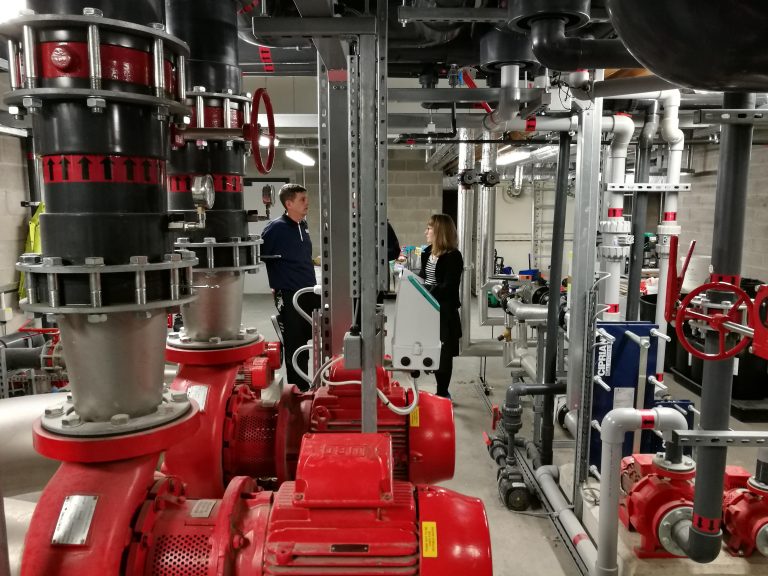
SWG3 was working towards operational net zero by 2025. Thousands of people dancing at events, along with the venue’s lighting and sound equipment, produce a significant amount of body and ambient heat, which was being lost to the outside air. The rest of the time, the offices and operational buildings were heated using gas boilers. BODYHEAT captures the heat produced during an event, stores it underground in an array of boreholes, and reuses it for the building after the crowds have gone home.

BODYHEAT is a first of its kind system, so there was no blueprint to follow. Taking an idea from basic engineering principles through to a working, reliable installation carried a high level of technical uncertainty. Managing that meant being open with SWG3 about both the benefits and the risks at every stage, so design decisions could be made together and the finished system met the venue’s needs as closely as possible.
The idea for BODYHEAT was first put forward by our founder, David Townsend, in 2019. Our team then carried out a feasibility study to test whether it would work in practice, including an investment-grade business case that was later used to help secure funding from bodies including the Scottish Government.
The initial design for a borehole thermal energy storage system was turned into a working system alongside an engineering partner. When drilling began our geologists were on site, supporting SWG3 through construction and commissioning.
SWG3’s heating and cooling are now met using heat recovered from its own events rather than gas. Twelve boreholes, each 200 m deep, store that reclaimed heat until it is needed, and the venue’s electricity comes entirely from renewable sources. Together this is expected to save around 37 tonnes of carbon dioxide a year.
A big part of going net zero is improving the energy efficiency of the building, and BODYHEAT allows us to do that.
Every project started as a question about what was underneath a building. Ask us the same question about yours.